Juno Beach is one of the smallest and most distinctly low-density towns on the Palm Beach County coast, home to roughly 3,900 residents packed into just under two square miles of barrier island and mainland. It's a town built around the ocean rather than around a downtown: a narrow corridor of condo buildings runs along State Road A1A and US Highway 1, backed by quiet single-family streets, with nearly ten miles of some of the most active sea turtle nesting beach anywhere in the world.
From Celestial Railroad Stop to Incorporated Town
Juno's name goes back to the 19th century, when the settlement was named for the Roman goddess Juno as a companion to nearby Jupiter. In the late 1880s, the community briefly became the county seat of what was then Dade County and the southern terminus of the Jupiter and Lake Worth Railway, nicknamed the "Celestial Railroad" for its stops at Juno, Mars, Venus, and Jupiter. That prominence faded fast once Henry Flagler's development of Palm Beach shifted the region's center of gravity south in the 1890s, and the Celestial Railroad shut down in 1895 after only about six years of service. Modern Juno Beach traces to the late 1940s, when Bessemer Properties platted a subdivision near the Seminole Golf Club, and the town was officially incorporated in 1953. Street naming by the Juno Beach Garden Club in 1958 and a wave of condominium construction through the 1960s shaped the town's residential character, and its Town Center, completed in 1991, gave it a civic anchor without ever pushing it toward high-density development.
Neighborhoods & Real Estate
Juno Beach's real estate is defined by its oceanfront condo corridor along A1A, with buildings like Ocean Trace, Sea Oats, Beachfront, and Ocean Royale offering direct beach or ocean-view living, generally in low-rise buildings that keep with the town's low-density character. Inland and along US-1, single-family homes and smaller condo communities round out the market, and newer construction like The Dunes at Juno Beach has added townhome-style options close to the water. Prices span a wide range, from more modest condo residences to oceanfront homes and penthouses well into the millions. Juno Beach's small size means inventory turns over in a tighter, more local market than its larger neighbors.
Loggerhead Marinelife Center & the Beach
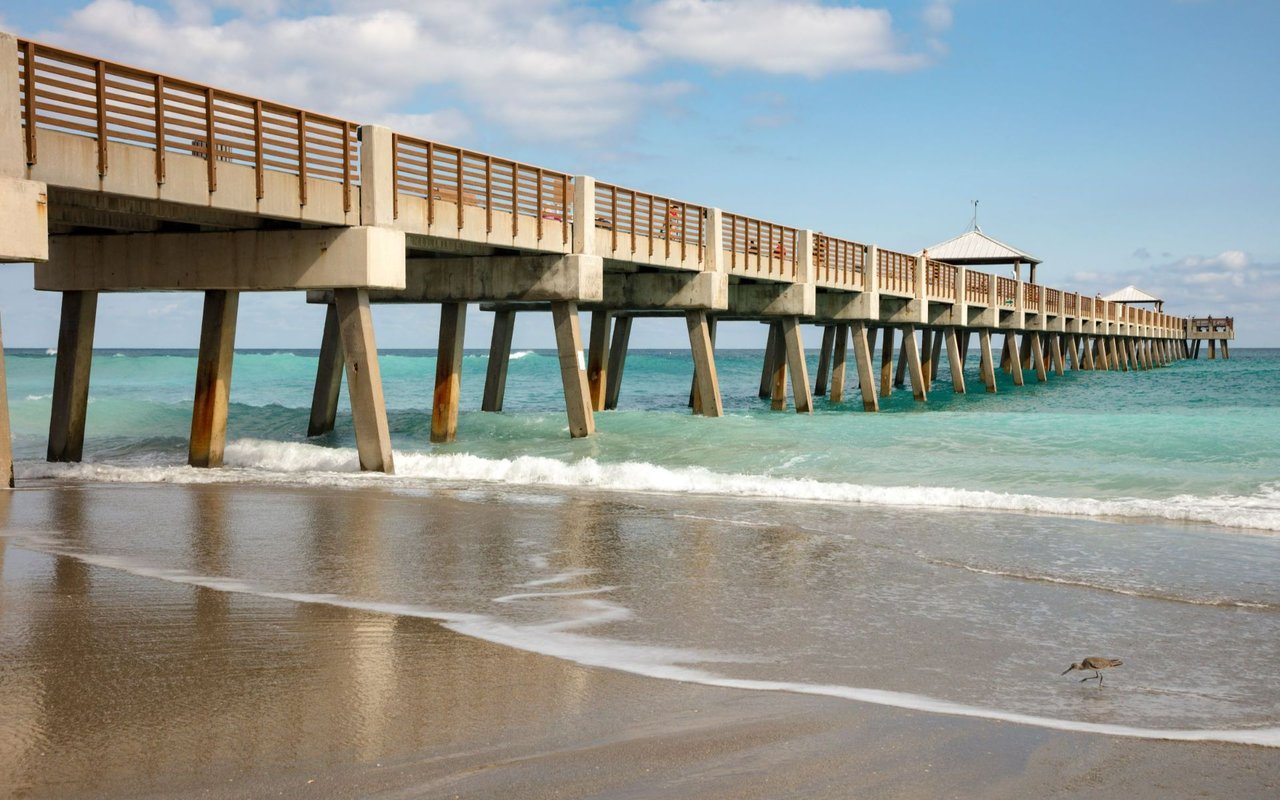
Juno Beach's most distinctive landmark sits right on the sand. Loggerhead Marinelife Center began more than 40 years ago when local resident Eleanor Fletcher started teaching children about the sea turtles nesting on the beach behind her real estate office. What started as a small museum has grown into a 501(c)3 nonprofit research, rehabilitation, and education center with a full-service veterinary hospital, and more than 300,000 visitors come through each year to see its sea turtle patients and exhibits. The Center's research reflects just how significant this stretch of coast is: in 2023, its 9.5-mile survey area recorded more than 25,000 sea turtle nests, including loggerhead, green, and leatherback turtles, producing over a million hatchlings. Loggerhead Marinelife Center also manages the Juno Beach Pier, a 993-foot fishing pier built in 1999 after the original 1950 pier was destroyed in a 1984 storm, with a bait shop, snack bar, and gift store at the base.
Parks & Walkability
Juno Beach Park sits just over five acres with 300 feet of guarded, dog-friendly beach centered on the pier, along with picnic areas and outdoor showers. Loggerhead Park, home to the Marinelife Center, and the Juno Dunes Natural Area add more green and natural space nearby. Juno Beach carries a Walk Score of 57, rated Somewhat Walkable, meaning some errands are doable on foot but a car is still the practical choice for most trips, consistent with a small, spread-out coastal town. Bike infrastructure exists along nearby trail connections, though several stretches of road carry moderate to heavy traffic.
Schools
Juno Beach falls within the Palm Beach County School District. Students are zoned to Howell L. Watkins Middle School and William T. Dwyer High School, both well-regarded options in the district. Elementary zoning depends on the specific address within town. Verified accurate as of July 4, 2026, though families should confirm exact elementary assignment through the district's official attendance boundary tool given Juno Beach's small footprint and split zoning lines. Private options in the surrounding area are also within easy reach for families who prefer them.
Working With Me
Juno Beach is a small market, and that's part of its appeal. It's a place where oceanfront living doesn't come with the density or traffic of bigger coastal towns nearby, and I like working with buyers who want exactly that. I currently have a listing at 302 Alicante Drive, part of Alicante, a small gated enclave just steps from the beach. Whether you're looking at a condo along A1A or a quieter street off the beach, I can walk you through what actually separates one building or block from another here.
Seth Mansfield | Douglas Elliman
Frequently Asked Questions
What is it like living in Juno Beach?
Juno Beach is a small, quiet oceanfront town of roughly 3,900 residents with a low-density condo corridor along A1A, quick beach access, and one of the busiest sea turtle nesting stretches of coastline anywhere in the world.
What are the best condos in Juno Beach?
Well-known oceanfront condo buildings include Ocean Trace, Sea Oats, Beachfront, and Ocean Royale, along with newer construction like The Dunes at Juno Beach closer to the water.
Is Juno Beach walkable?
Juno Beach carries a Walk Score of 57, rated Somewhat Walkable. Some errands can be done on foot, but most residents rely on a car given the town's small, spread-out layout.
What schools serve Juno Beach?
Juno Beach falls within the Palm Beach County School District. Students are zoned to Howell L. Watkins Middle School and William T. Dwyer High School, with elementary assignment depending on the specific address.
What is the Loggerhead Marinelife Center?
Loggerhead Marinelife Center is a nonprofit sea turtle research, rehabilitation, and education facility on the beach in Juno Beach. It draws more than 300,000 visitors a year and manages the nearby Juno Beach Pier.